Link Building
The Complete Guide to Link Building in SEO for Higher Google Rankings
Introduction: Why Link Building Still Drives Rankings in 2026
Link building in seo is the process of earning or acquiring links from other websites to your own website. Since the early PageRank days, Google has used incoming links as signals of trust, authority, and relevance. Backlinks are one of the top ranking factors for SEO, influencing how search engines assess the relevance and authority of a site.
The idea is simple: backlinks act as endorsements for your content, signaling to search engines that your site is trustworthy and valuable, which can lead to higher rankings in search results. When a trusted site links to your page, it passes a portion of its authority, often called link equity, to your site.
But modern link building is not just about more links. Google now evaluates links alongside content quality, user behavior, topical relevance, and AI-driven systems such as RankBrain, BERT-style language models, SpamBrain, and AI Overviews. Updates from March 2024 onward made manipulative tactics riskier, while rewarding stronger content, real expertise, and natural authority.
This guide is written from the perspective of Local Ranking Coach, an SEO agency with 20+ years of hands-on experience helping businesses earn high quality backlinks and grow organic visibility.
You will learn:
What link building is and why it matters
How search engines evaluate link quality
How to build links safely for local and national SEO
The best link building strategies in 2026
Common mistakes that can hurt rankings
How to measure rankings, traffic, leads, and ROI
What Is Link Building SEO?
Link building is the process of acquiring hyperlinks from other websites to your own and is a foundational off page seo strategy. These hyperlinks help users move between web pages, and they help search engines discover, crawl, and evaluate content.
A link usually contains a destination URL and anchor text, which is the clickable wording users see. Using descriptive anchor text that includes relevant keywords helps search engines understand the linked page’s content when linking related pages within your website.
Modern organic link building is closely connected to content marketing, digital PR, relationship building, and brand authority. The safest approach is earning links through useful content rather than forcing shortcuts.
Understanding Backlinks and Link Types
There are two main types of links that affect SEO: internal links, which connect pages within your own website, and external links, which come from other websites and point to your pages.
External links, often referred to as backlinks, are considered more authoritative than internal links because they act as endorsements from independent sources. Internal links still matter because they help distribute authority from strong own pages to important service, product, or location pages.
Common link types include:
Editorial links: earned naturally when a publisher references your content.
Resource links: placed on curated lists, guides, or educational pages.
Image links: created when other sites embed charts, infographics, or visuals.
Acquired links: earned through outreach, guest blogging, digital PR, or partnerships.
Nofollow, sponsored, and UGC links: attributes used for paid links, sponsored content, forums, comments, and user-generated content under Google’s link spam policies.
Links can be categorized into three types based on their destination: links to your homepage, links to specific pages that need to rank well, and links to informational pages that provide value to users.
Why Link Building Matters for SEO
The more high-quality backlinks a page has, the higher it tends to rank in Google, making backlinks a crucial factor in SEO. If two websites have similar content and optimization, the site with a stronger backlink profile is likely to rank higher on search engine results pages.
High quality backlinks help by:
Improving search engine rankings for competitive keywords.
Helping search engine bots navigate the web by crawling links, and earning links from indexed sites helps search engines find and index your new web pages faster.
Building trust, because search algorithms interpret links as a testament to your site’s quality, with links from reputable websites validating your credibility.
Sending referral traffic. Backlinks drive direct, targeted visitors to your website who click the links while reading related content.
For example, a roofing company in Austin that earns links from local news, supplier associations, and neighborhood blogs may see stronger Google Maps visibility within 6–9 months. The links support local authority while the site’s optimized pages convert the traffic into calls.
How Search Engines Evaluate Backlinks
Search engines do not treat all links equally. The quantity, quality, and context of the links pointing to your website are evaluated by search engines to calculate rankings.
Key factors include:
Domain authority: Tools like Moz Domain Authority, Ahrefs Domain Rating, and Semrush Authority Score are proxies. The more high-quality backlinks you accrue, the higher your domain authority becomes, facilitating competitive rankings for all pages on your site.
Relevance: Relevant links from relevant websites in your niche usually matter more than links from unrelated sites with inflated metrics.
Anchor text: Natural anchor text helps search engines understand the topic, but exact-match anchors repeated too often look manipulative.
Placement: In-content editorial links usually carry more weight than footer, sidebar, or author bio links because users are more likely to click them.
Link velocity: New links should appear at a natural pace. Sudden spikes from similar low-quality domains can trigger spam signals.
Link quality: Different types of links have varying impacts on a page’s ranking in Google, with high-quality backlinks from authoritative sites generally providing more SEO value than links from less reputable sources.

Why Link Building Is Important for Local SEO
Local SEO depends on proximity, relevance, and prominence. Link building mainly strengthens prominence by showing Google that a local business is known, trusted, and referenced within its market.
Local businesses need both traditional backlinks and citations. Citations confirm business details, while local backlinks from chambers of commerce, newspapers, schools, nonprofits, trade groups, and community blogs reinforce geographic trust.
This is where small businesses can beat larger brands. A dentist, plumber, restaurant, or family law firm may not have national brand recognition, but a handful of local quality links can move the business into more relevant search results.
Local Rankings, Citations, and Authority Signals
Local citations are structured mentions of your business name, address, phone number, and website URL. They appear on platforms such as Google Business Profile, Yelp, Bing Places, industry directories, and local business portals.
Useful local sources include:
Local newspapers and magazines
“Best of city” lists
Chambers of commerce
Neighborhood associations
Sports clubs, charities, and event pages
Trade associations and member directories
Industry-specific directories
For example, a London physiotherapist could earn links from sports clubs, local health blogs, community event pages, and professional directories. These links and citations support Google Business Profile signals such as reviews, categories, posts, and local landing pages.
How Link Building Helps Small and Service-Based Businesses
Small businesses often need more phone calls, form submissions, bookings, and walk-in traffic. Targeted link building helps them show up where buyers are already searching.
Examples:
A boutique hotel earns travel blog links, tourism board citations, and local event links. Within 6–12 months, it can gain more traffic from city-specific searches.
A plumbing company sponsors a community event, joins a trade association, and contributes expert quotes to local media. A few valuable backlinks can improve map pack visibility.
Focus on acquiring links from authoritative, trusted sites since one link from such a source is more valuable than many links from low-quality sites.
Our Approach to Local SEO Link Building
At Local Ranking Coach, our local link building playbook is built from 20+ years of real SEO campaigns. We do not sell generic link packages. We build quality links around the client’s market, audience, and business goals.
Our framework includes:
Local keyword research and city-level competitor analysis
Citation audits and NAP cleanup
Competitor backlink audits
Outreach to relevant local publishers and organizations
Content-led earning links through guides, data, and expert commentary
Avoiding PBNs, link farms, and manipulative shortcuts
An anonymized HVAC client, for example, grew organic leads by more than 140% in 12 months after citation cleanup, local PR, and links from trade and community sources.
Building a Long-Term Link Building SEO Strategy
Ad-hoc link building sprints rarely create lasting growth. A real strategy connects keyword research, content planning, link prospects, outreach, reporting, and business goals.
Effective link building requires a mix of creating shareable resources, strategic outreach, and leveraging existing brand presence. It should help you generate links steadily while improving rankings, leads, and brand trust.
Creating a Successful Link Building Roadmap
Start with clear goals:
Rank in the top 3 for a commercial term by a specific quarter.
Increase organic leads by 40% year over year.
Build authority around one service category or city.
Acquire high quality backlinks to priority pages.
Then analyze competitors backlinks. Replicating your competitor’s backlinks can be an effective strategy, as if someone is linking to your competitor, they might be open to linking to you too.
A strong roadmap should:
Identify target pages: homepage, money pages, and informational assets.
Compare top-ranking pages in google search for referring domains and link quality.
Build topic clusters that support authority.
Use internal links so links earned by guides help service pages rank.
Define how many backlinks each target page may need based on competition.
Keyword Research for Link Building Campaigns
Keyword research for link building is not only about volume. It is also about link intent: which topics are naturally link worthy?
For example, a roofing company could cluster:
“how to fix a roof leak”
“roof leak repair cost”
“does insurance cover roof leaks”
“emergency roof repair checklist”
This cluster can become a guide, calculator, or checklist that attracts links and supports commercial service pages.
Use tools like Google Keyword Planner, Ahrefs, Semrush, Google Search Console, and even a search engine journal or industry publication for topic discovery. Anchor text strategy should follow the research, using branded, partial-match, generic, and URL anchors naturally.
Content Marketing and Linkable Assets
Creating linkable assets involves producing content that is strategically crafted to attract backlinks, such as industry surveys, studies, online tools, and how-to guides.
Linkable content should provide unique insights, clear answers, or helpful tools that others genuinely want to reference and link to. Original research and comprehensive guides can attract links from industry sites and journalists as valuable resources.
Examples of link bait that can work:
2026 industry trend reports
Cost calculators
Local ranking studies
Step-by-step guides
Templates and checklists
Original survey data
Promoting your linkable content is essential, as people cannot link to resources they are unaware of; effective promotion increases the likelihood of earning backlinks.
Relationship-Based Outreach and Partnership Building
Link outreach involves contacting website owners to request backlinks, often referred to as ‘link prospecting’. The best outreach starts before the request.
Building relationships with industry peers before making link requests can significantly increase the likelihood of success in outreach efforts.
Useful channels include:
Blogger outreach
Podcast interviews
HARO, Connectively, Qwoted, and #JournoRequest
LinkedIn networking
Industry Slack groups
Local business partnerships
Social media conversations
Effective link outreach techniques include guest posting, broken link building, and resource page link building, which all aim to provide value to the target site while securing a backlink.
Best SEO Link Building Techniques in 2026
There is no one-size-fits-all tactic. The best link building techniques depend on your niche, content quality, authority, and risk tolerance.
Use these link building tactics carefully, with relevance and user value as the filter.
Guest Posting and Guest Blogging
Guest posting remains a popular link building strategy, where you write high-quality content for other websites in exchange for backlinks, provided the content is relevant and valuable.
Guest blogging and contributing original articles to reputable websites can secure contextual backlinks. The safest opportunities come from sites with real audiences, editorial standards, topical relevance, and clean outbound link profiles.
Checklist:
Does the site have real traffic?
Is the audience relevant?
Are posts edited?
Are outbound links natural?
Would you want your brand seen there?
Are paid links marked nofollow or sponsored?
Avoid guest post farms and repeated exact-match anchor text.
Broken Link Building
Broken link building means finding broken links on relevant sites and suggesting your live resource as a replacement.
Finding broken outbound links on authoritative blogs and suggesting relevant content as a replacement is a strategy for earning backlinks. This works especially well on resource pages, university pages, old guides, and industry blogs.
Process:
Use search operators like “keyword + resources” or “keyword + helpful links.”
Crawl pages for 404 errors.
Create content that matches the old page’s intent.
Email the site owner with a helpful note and replacement URL.
Finding broken links is not enough. Your replacement must be genuinely useful.
Niche Edits and Contextual Link Insertions
Niche edits involve adding a link to an existing relevant article. They can work when the edit improves the article, but they can become risky when scaled through paid networks.
Use niche edits only when:
The linked site is relevant.
The paragraph naturally supports the link.
The content is updated for readers.
The link is editorial, not forced.
The placement is not part of a large paid scheme.
Not all links from existing articles are valuable. Context matters.
Local Citation and Directory Link Building
Citation building is foundational for local SEO. Many directory links are nofollow, but they still support trust, NAP consistency, and sometimes valuable referral traffic.
The process is simple:
Audit current listings.
Fix incorrect NAP data.
Remove duplicates.
Add links on authoritative local and industry directories.
Avoid mass-submission directories with thin pages.
Good citations help major search engines connect your business to a real place, industry, and service area.
Resource Page and “Best Of” List Link Building
Resource pages are curated lists of helpful content. They are strong link prospects because the page already exists to add links to useful resources.
Search for:
“keyword + resources”
“keyword + helpful links”
“best service in city”
“industry tools”
“recommended vendors”
To earn placement, create content that is better than what is already listed. For example, a tax firm could publish a small business tax checklist and pitch it to entrepreneur resource pages.
Skyscraper Technique and Content Upgrades
The skyscraper technique means finding top-linked content, creating a stronger version, then contacting sites linking to the older resource.
Workflow:
Find a highly linked blog post or guide.
Identify gaps: old data, weak examples, poor layout, missing visuals.
Create content that is more complete and current.
Export the sites linking to the old page.
Pitch your upgraded resource.
This works best in fast-changing niches like SaaS, finance, marketing, healthcare, and technology.
Digital PR, Surveys, and Data-Driven Link Earning
Digital PR earns coverage from journalists, magazines, news sites, and large blogs. It is one of the best ways to attract high quality links from reputable sites.
Campaign examples:
A consumer survey about buying behavior in 2026.
A city ranking study for affordability, safety, or service demand.
An industry benchmark report with original data.
Proactively pitching your content to relevant websites and publications is an important aspect of link building. Keep pitches short, angle-driven, and useful to the journalist’s audience.
Leveraging Visual Assets: Infographics and Other Media
Infographics, charts, videos, and interactive tools can help attract links when other sites use them as references.
Best practices:
Pair every visual with a full article explaining the data.
Offer embed codes where appropriate.
Create custom versions for top publishers.
Avoid low-quality infographic directories.
Promote visuals to relevant websites, not random directories.

Newsjacking and Timely Content
Newsjacking means connecting your expertise to a breaking or trending story. It can generate links quickly if your response is fast and relevant.
Examples:
A cybersecurity firm comments on a major data breach.
An energy consultant analyzes a new climate policy.
A legal expert explains a major regulation change.
Speed matters, but relevance matters more. Off-topic commentary can weaken brand trust.
Advanced Link Building Techniques for SEO Experts
Advanced link building focuses on topical authority, AI-era visibility, entity trust, and risk control.
Topical Authority and Semantic Link Building
Topical authority is Google’s assessment of how deeply your site covers a subject. External backlinks and internal links both support it.
For example, an SEO site might build clusters around:
Technical SEO
Local SEO
Ecommerce SEO
Content optimization
Link building strategies
When external sites link to your site’s hub pages, authority can flow through internal links to related own pages. Semantic context, related entities, and relevant links help search engines understand what your site is known for.
AI-Assisted Outreach and Link Monitoring
AI can help scale research, but it should not replace judgment.
Use AI to:
Cluster relevant link prospects by topic.
Summarize a publisher’s content.
Draft first-pass outreach emails.
Monitor new links and lost links.
Flag suspicious spikes or irrelevant anchor text.
Humans should review every prospect, pitch, and placement. Automation should support quality control, not create spam.
Competitor Backlink Gap and Opportunity Analysis
Backlink gap analysis compares your link profile against competitors to find domains that link to them but not you.
Process:
Export competitor backlinks.
Filter for editorial placements.
Group by topic and authority.
Remove spam and unrelated sites.
Prioritize likely opportunities.
Build a 3–6 month outreach plan.
Targeted link outreach involves researching top-ranking pages for specific keywords and reaching out to the websites that link to those pages to request a link to your content.
E‑E‑A‑T, Brand Authority, and Link Building
E‑E‑A‑T stands for Experience, Expertise, Authoritativeness, and Trustworthiness. It matters heavily in health, finance, legal, and other sensitive topics.
Authority signals include:
Expert author bios
Consistent brand information
Mentions on authoritative sites
Organization and Person schema
Editorial links from trusted industry sources
A medical expert earning citations from respected health portals, or a finance advisor earning links from regulated industry publications, sends stronger trust signals than dozens of unrelated links.
Common Link Building Mistakes to Avoid
Google’s spam systems have made shortcuts more dangerous. Bad link building can waste money, damage trust, or trigger manual actions.
Buying Spammy Backlinks and Link Schemes
Buying large volumes of low quality links from link farms, PBNs, or marketplaces violates Google’s policies.
Red flags include:
Identical site designs across a network
Thin content
Unnatural outbound link patterns
Links from unrelated posts
Obvious paid insertions without disclosure
Using shady techniques like buying links or participating in link farms can lead to severe penalties from Google, including removal from search results. If advertising or sponsorship is involved, use nofollow or sponsored attributes.
Over-Optimized Anchor Text Profiles
Over-optimization happens when too many links use exact commercial anchors such as “buy red shoes online.”
A natural profile includes:
Branded anchors
Naked URLs
Generic anchors
Partial-match anchors
Topic-based anchors
Keep exact-match anchors a minority. Many safe profiles lean heavily toward branded and neutral anchors.
Ignoring Relevance and User Value
Links should make sense to readers. A casino site linking to a dentist or a random overseas blog linking to a local plumber usually adds little value.
Relevance over volume is the rule. Fewer links from relevant websites often outperform hundreds from unrelated domains.
Audit your backlinks regularly. If toxic patterns appear in bulk, review whether removal requests or Google’s disavow tool are appropriate.
Black Hat and Automated Link Building Tactics
Avoid:
PBNs
Automated comment spam
Large-scale link exchanges
AI-generated guest posts with no review
Mass forum profile links
Spammy directories
Ethical link building focuses on earning backlinks through genuine relationships and high-quality content rather than manipulative tactics. High-quality backlinks are earned by creating valuable content that others want to reference, rather than through spammy or manipulative practices.
How to Measure Link Building Success
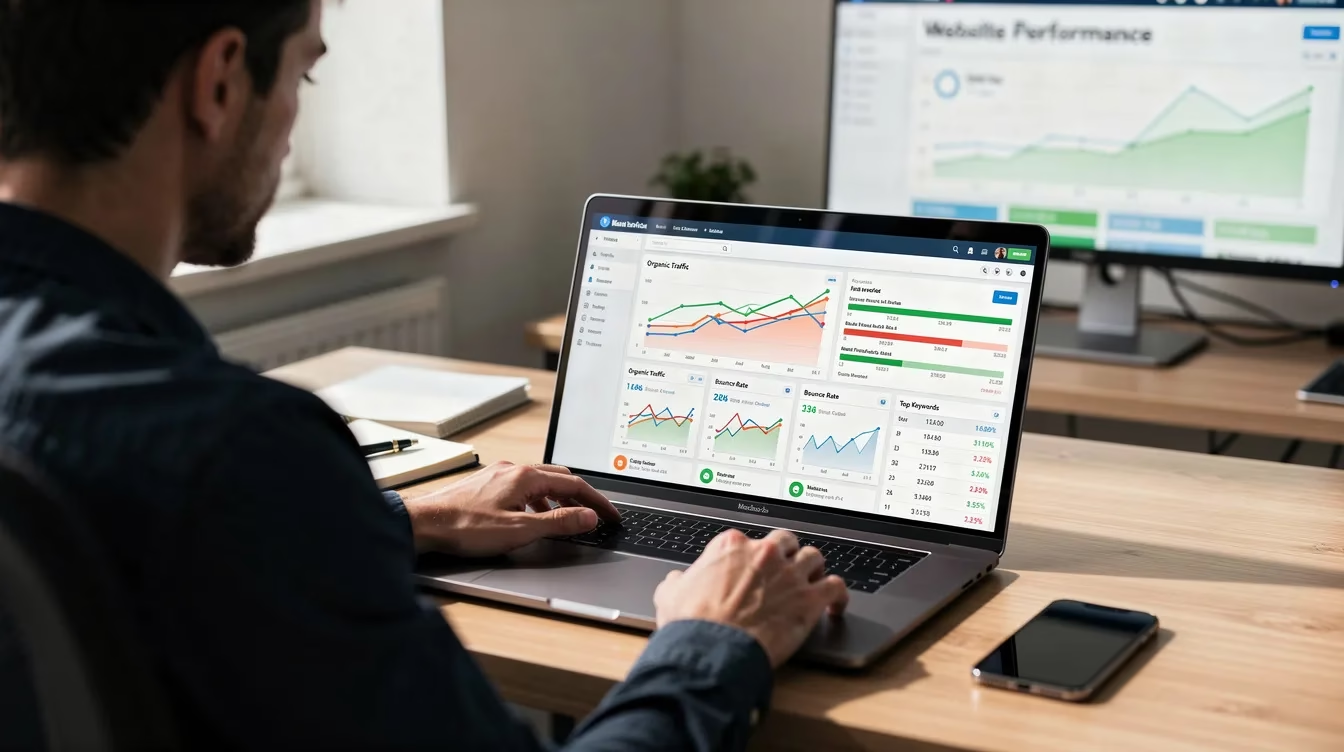
Link building should be measured by rankings, traffic, leads, and revenue. It often takes 4–12 weeks to see early movement and 6–12 months for stronger gains in competitive markets.
Core SEO Metrics and Link KPIs
Track:
Referring domains
Authority and relevance of sites linking
New links and lost links
Anchor text distribution
Rankings for target pages
Non-branded organic traffic
Referral traffic
Conversions
The goal is not simply acquiring links. The goal is acquiring valuable links that increase search rankings, visibility, and revenue.
Backlink Monitoring Tools and Audits
Use tools such as Ahrefs, Semrush, Moz, and Google Search Console to monitor links pointing to your site.
Monthly or quarterly audits should answer:
Which tactics generate links?
Which links drive more traffic?
Which pages attract links naturally?
Are there sudden spam spikes?
Are important links disappearing?
Routine monitoring protects your link building campaign from decay and risk.
Tracking ROI from Link Building Efforts
Connect link building efforts to business outcomes.
Track:
Form submissions
Calls
Bookings
Demo requests
Ecommerce revenue
Assisted conversions from referral traffic
Simple example: if a $5,000 campaign generates 20 extra qualified leads and five new customers worth $3,000 each, the campaign creates $15,000 in revenue before future compounding gains.
Why Businesses Choose Our Agency for Link Building SEO
Many businesses know they need links but do not have the time, systems, or relationships to do it safely. Local Ranking Coach acts as a strategic SEO partner, not a link vendor.
20+ Years of Real-Life SEO Experience
We have worked through the early PageRank era, Penguin, Panda, Helpful Content systems, spam updates, and today’s AI-driven search.
That experience helps us:
Spot risky tactics before they cause damage
Build strategies around real ranking factors
Adapt when Google changes
Serve local, national, ecommerce, healthcare, legal, and service-based businesses
Customized Link Building Campaigns and Strategies
Every campaign starts with an audit:
Technical SEO
Content quality
Existing backlink profile
Competitor link gaps
Keyword opportunities
Local citation health
Then we customize outreach angles, anchor text rules, target domains, and content assets around the client’s niche and location.
Transparent Reporting and Communication
Our reports show:
Links earned
Referring domains
Anchor text
Placement context
Rel attributes
Ranking changes
Traffic changes
Leads and conversions
Clients can review every link to your site and understand why it was earned.
Results-Driven, Ethical SEO Services
Our priority is sustainable growth: higher Google rankings, stronger brand authority, and more qualified leads over time.
We do not trade long-term domain health for short-term wins. If you want a safer plan to build quality links, request a backlink audit or strategy consultation with Local Ranking Coach.
Future Trends in Link Building SEO
Links will remain important, but the way algorithms interpret them is changing. The future belongs to brands with authority, useful content, and real relationships.
AI Search, Google AI Overviews, and Link Signals
AI Overviews rely on entities, context, corroboration, and trustworthy sources. Strong backlinks from authoritative, semantically relevant sites can help Google trust your brand as a reliable source.
Structured data, consistent brand naming, author profiles, and entity SEO now work alongside link building.
User Experience, Engagement, and Authority
In 2026, winning pages combine authority and satisfaction.
Pages that earn links should also have:
Fast load times
Mobile-friendly design
Clear headings
Useful answers
Strong formatting
Helpful next steps
If users land on a linked page and leave immediately, the authority signal is weaker than it could be.
The Future of Ethical, Relationship-First Link Building
As algorithms detect manipulation better, relationship-first outreach and digital PR will keep gaining value.
The brands that win will:
Create content worth citing
Build relationships with journalists and creators
Participate in niche communities
Turn unlinked mentions into links
Treat link building as reputation building
Finding unlinked brand mentions is a valuable strategy where you identify instances where your brand is mentioned without a link and reach out to request a hyperlink.

Final Thoughts on Link Building in SEO
Link building remains essential, but it has to be done with strategy. Quality, relevance, and credibility matter more than volume.
Key Takeaways
Link building helps search engines evaluate authority and trust.
High quality links from reputable sites are more powerful than many weak links.
Content marketing, outreach, digital PR, and local relationships work best together.
Avoid spam, paid link schemes, and over-optimized anchors.
Measure SEO results and business outcomes, not just total backlinks.
To build quality links, create content that is useful, original, and easy to reference.
Work with a Proven Link Building Partner
If you do not have time to find relevant link prospects, contact other website owners, create link worthy assets, and monitor results, an experienced partner can help.
Local Ranking Coach brings 20+ years of real-world SEO experience to local and national campaigns. Book a strategy call or request a backlink audit to see where your best opportunities are.
FAQ: Link Building in SEO
What is link building in SEO?
Link building in SEO is the process of earning or acquiring hyperlinks from other websites to your site. These inbound links help search engines understand authority, trust, and relevance.
The safest approach is earning links through useful content, digital PR, and genuine relationships instead of manipulating rankings with spam.
How long does link building take to improve rankings?
Early movement can appear in 4–12 weeks, but meaningful results usually take 6–12 months. Timing depends on competition, site age, content quality, and current authority.
Link building compounds over time as new links, stronger content, and internal links support more pages.
What are the best link building strategies right now?
The best current strategies include guest posting, broken link building, digital PR, resource page outreach, unlinked mention outreach, and linkable assets.
The right mix depends on your niche, budget, and risk tolerance.
Is link building still important with AI-driven search?
Yes. Links remain foundational signals even as AI systems evaluate entities, meaning, and user satisfaction.
Strong backlinks can help your brand appear in AI Overviews, knowledge panels, traditional blue links, and relevant search results.
How many backlinks do I need to rank?
There is no fixed answer to how many backlinks you need. Compare your page’s referring domains, link quality, and content depth against the current top-ranking pages.
A difficult keyword may require dozens or hundreds of strong referring domains, while a local term may need only a few excellent local links.
What makes a high quality backlink?
A high quality backlink usually comes from an authoritative, relevant site with real traffic, editorial standards, natural anchor text, and an in-content placement.
The best links help users, support context, and come from websites your target audience already trusts.
Can bad backlinks hurt my website?
A few poor links are often ignored, but large-scale toxic patterns can cause algorithmic devaluation or manual actions.
Monitor your profile regularly, remove harmful links when possible, and use disavow only when there is clear evidence of risk.
Why hire an SEO agency for link building?
A reputable agency brings systems, relationships, prospecting tools, outreach experience, and risk management.
Local Ranking Coach focuses on relevant links, valuable backlinks, sustainable growth, and strategies aligned with Google’s guidelines and your business goals.
Get Your Free SEO Audit Today
See exactly how your website can rank higher and generate more calls. No obligation, no sales pressure.
We respect your privacy. No spam, ever.